MyGoDeFi / PropTech / FinTech
Trust for tokenized property.
I led product design for a blockchain-enabled real-estate investment platform, translating unfamiliar mechanics — fractional ownership, crypto trading, DeFi mortgages — into decisions two very different investors could trust. With no dedicated PM or design practice in place, I also owned product strategy, market analysis, and the visual system from scratch.
Role
Product Designer
Period
2020 - 2022
Engagement
Full-time
Industry
Property technology
Trust
Designed confidence into high-value property and financial decisions
Familiarity
Translated blockchain mechanics into recognizable transaction patterns
Evidence
Surfaced the information users needed before committing to an action
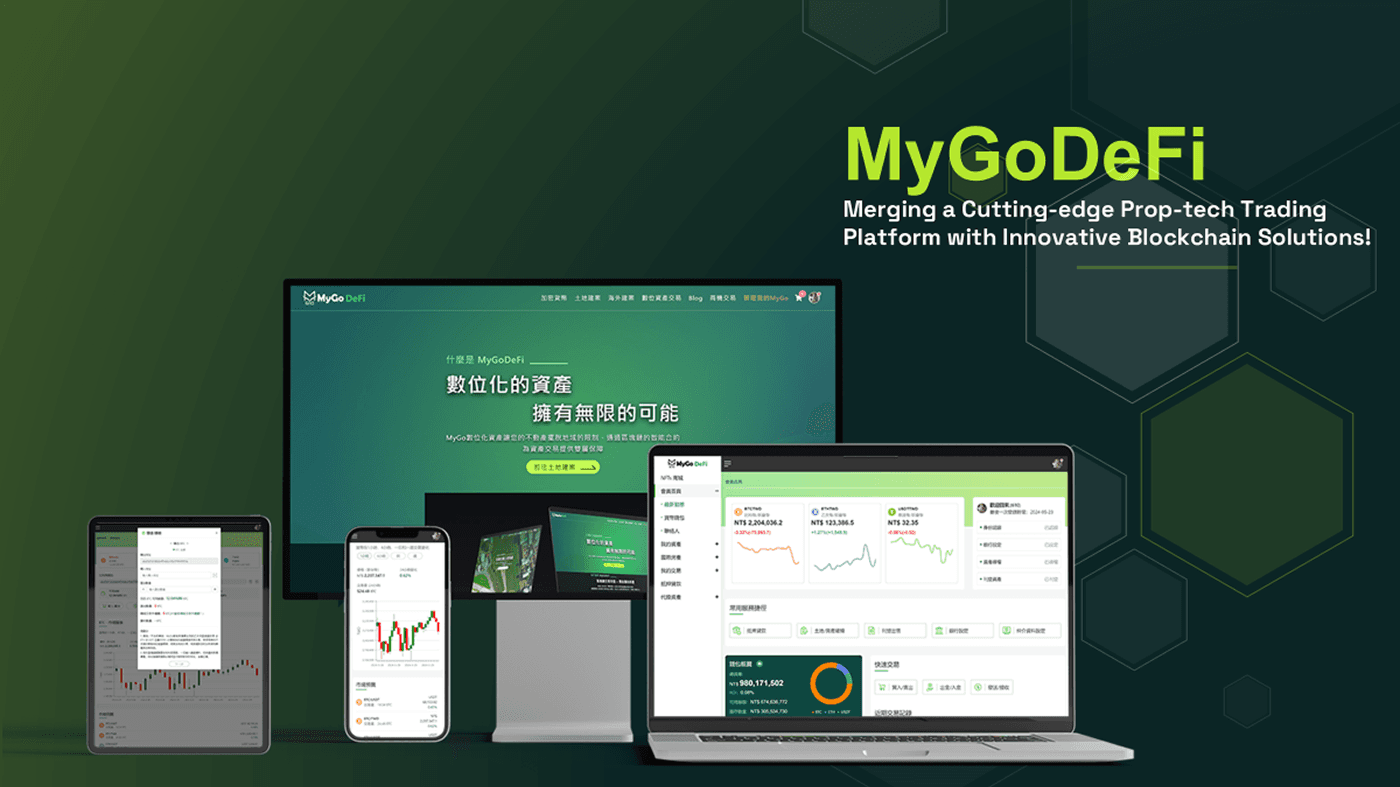
A complex product without a clear user model.
Challenge
The previous release had failed — an inexperienced team with no dedicated PM had shipped blockchain-based property investment without a validated user base or a supporting design practice. I inherited responsibilities beyond typical design scope: product strategy, roadmap, and market analysis, on top of translating unfamiliar concepts — fractional NFT ownership, crypto trading, DeFi mortgages — into something two very different investors could trust.
- The previous release hadn’t established the right experience for either target user.
- User needs — trust, guidance, efficiency, privacy — were never clearly defined.
- There was no mature product or design process to work from.
Solution
I grounded the rebuild in two contrasting personas — an inheriting landowner who needed hand-holding and trust, and a high-net-worth professional who wanted efficiency and exclusivity — and built the process that hadn’t existed before: wireframes, a moodboard, and a style guide, from scratch. Familiar commerce and trading patterns — cards, wallets, transaction tables — carried the unfamiliar blockchain mechanics so users could evaluate a property or crypto decision without first learning the underlying technology.
Different users. Same blocker: trust.
Ms. Wang
Idle Land Owner
Needs guidance, transparency, reassurance.
Mr. Zhang
High-Net-Worth Individual
Needs speed, privacy, confidence.
View persona research
Ms. Wang
Idle Land Owner
Age / Location
50–65, Yunlin, Taiwan
Digital literacy
Low — almost none
Financial status
Limited funds, inherited multiple properties
“I need someone I trust to help me. I don’t want to lose everything I’ve inherited.”
Pain points
- Information asymmetry
- Financial risk
- Social isolation
What she/he needed
- Accessible education resources
- Personalized consulting
- Supportive community
Mr. Zhang
High-Net-Worth Individual
Age / Location
40–50, Taipei metro
Occupation
Senior executive, doctor
Financial status
High net worth, values taste and refined living
“I need a stable investment that secures my financial future.”
Pain points
- Market volatility
- Fraud / deception risk
- Loss of privacy and exclusivity
What she/he needed
- Professional investment consulting
- Transparent transactions
- Strengthened security and privacy
Translate unfamiliar mechanics into familiar decisions.
Before any screen was drawn, the product had to work within a fixed set of domain constraints — the mechanics that come with a blockchain-enabled property platform, whether the interface acknowledges them or not.
Product-design response
Make the system understandable through familiar financial and commerce behaviors.
View product architecture
KYC → registration → platform layers
Registration → KYC identity verification → digital identity authorization
Crypto Wallet
Asset Rights Management
Transaction Management
Layer 2 — Off-chain
Chain-code execution
Transaction Order Management
Order settlement and generation
Layer 3 — Application
Chain-code execution
Layer 1 — Blockchain
View competitive analysis
With no PM on the project, competitive analysis fell to me. Four blockchain real-estate platforms — RedSwan, Propy, QuantmRE, and iintoo — showed a market split between institutional-only tools and consumer-friendly ones; MyGoDeFi needed to sit closer to the accessible end without losing the trust signals larger platforms lead with.
| Criteria | RedSwan | Propy | QuantmRE | iintoo |
|---|---|---|---|---|
| Value proposition | Tokenization of commercial real estate | End-to-end real estate transactions | Decentralized REITs and DeFi | Private real estate investment |
| Target audience | Institutional investors | Buyers, sellers, tenants, agents | Retail investors | Accredited investors |
| Key strengths | Track record, institutional focus, compliance | Global reach, user-friendly platform | Accessibility, DeFi integration, community | Institutional network, due diligence, curated deals |
| Key weaknesses | Limited access for small investors, complexity | Agent adoption, regulatory hurdles | New platform, DeFi volatility | Accredited-only, less blockchain focus |
| Design style | Dark mode, high-end commercial real estate | Gradient, Web3 style, animation | Traditional website + blockchain hybrid | Dashboard, performance-first design |
Build the product language before scaling the interface.
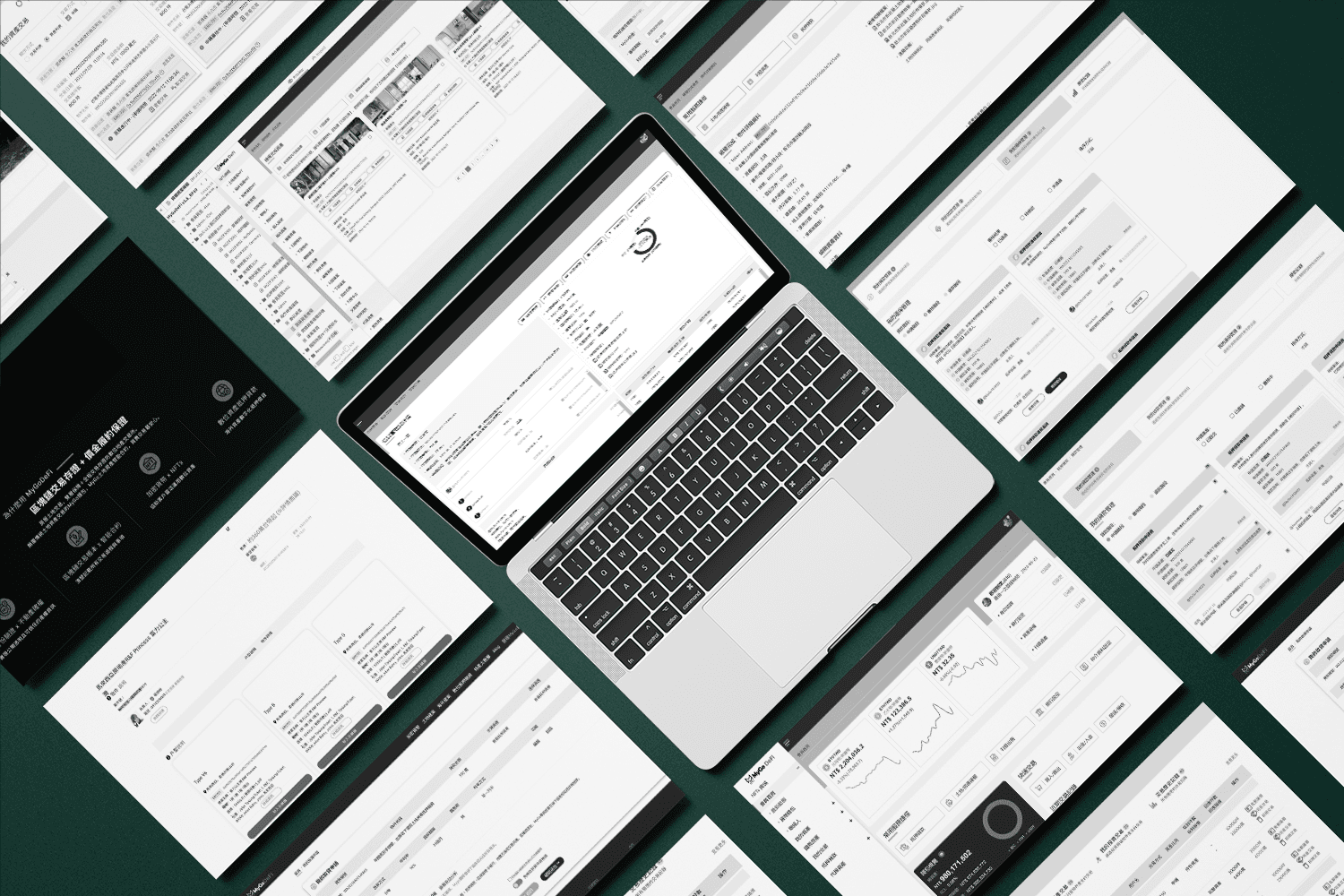
No style guide, moodboard, or wireframe set existed, and the project needed one. Low-fi wireframes worked out the KYC, listing, and trading flows; a moodboard set the visual direction; and a lightweight style guide — color roles, a type scale, and core components — carried it through to the product UI that follows.
Wireframes
Moodboard
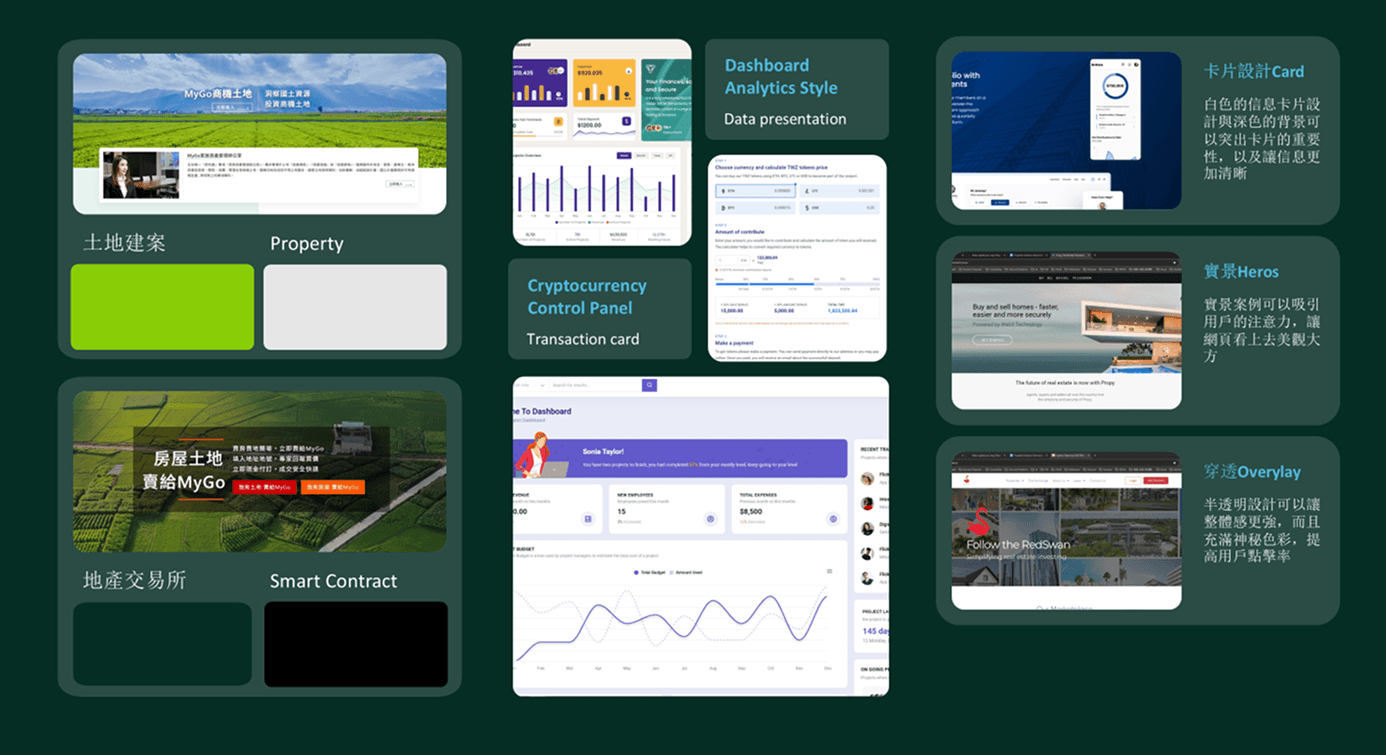
Property
Land and property photography grounds the platform in a real, physical asset.
Smart Contract
A dark, minimal treatment for the exchange itself.
Dashboard Analytics Style
Bar-chart data presentation as a reference for account and market views.
Crypto Control Panel
Transaction-card and currency-exchange UI references.
Card Design
White information cards against a dark background make each card’s importance stand out and information read more clearly.
Overlay
Semi-transparent overlays feel more cohesive, add a sense of mystery, and lift click-through.
Style guide — color roles
Translated here into the site’s own dark theme — the original defined Dark, Dark-Secondary, Primary, Light, Extra Light, and a Cons (error/negative) role.
Style guide — type scale (Roboto)
Make the blockchain disappear behind the object the user understands.
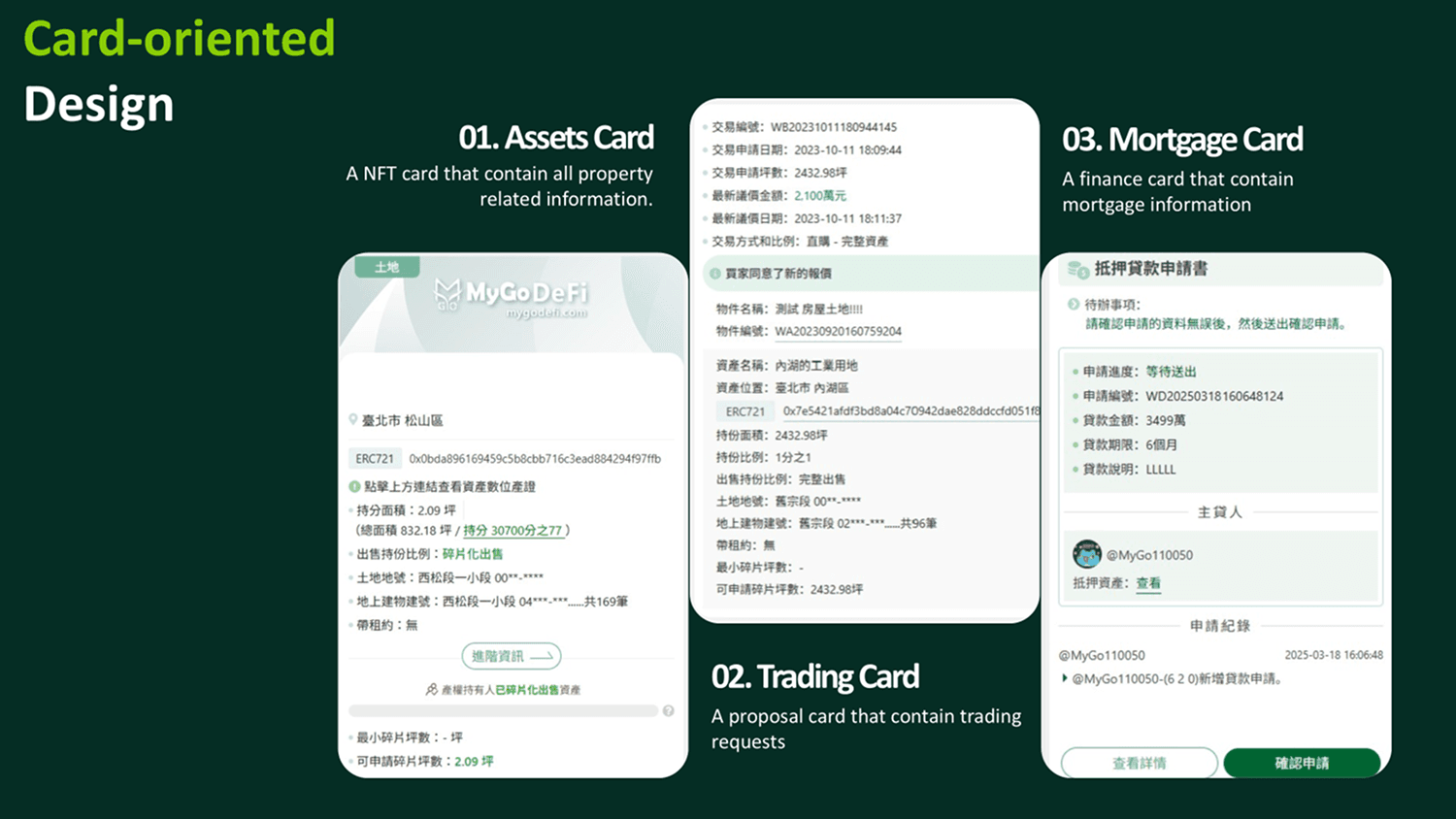
Users did not need to understand the blockchain architecture to understand the action. Three card types — a property’s fractional NFT ownership, an active trade negotiation, and a mortgage application — each read as a self-contained, familiar object rather than a raw blockchain record.
Assets Card
An NFT card holding a property’s full record — a real ERC721 token address and a fractional-ownership share, e.g. 2.09坪 of 832.18坪 total.
Trading Card
A proposal card for trading requests, carrying real negotiated offer amounts between two parties.
Mortgage Card
A finance card for mortgage applications — loan amount, term, and status.
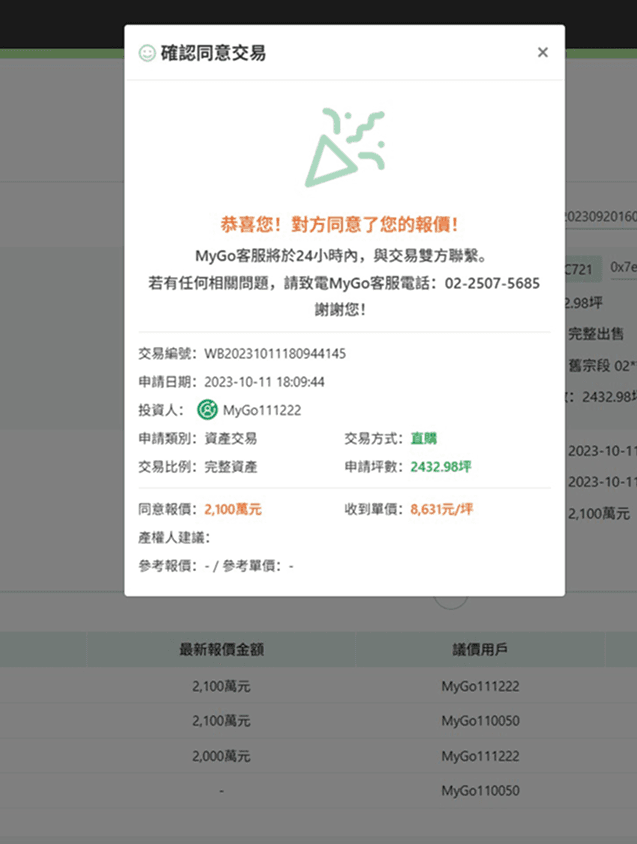
Decentralized negotiation, made concrete
A transaction-confirmation screen — “Congratulations! The other party agreed to your offer” — paired with a negotiation-history table showing the full back-and-forth of price offers between two users, so a decentralized agreement reads as clearly as a normal trade.
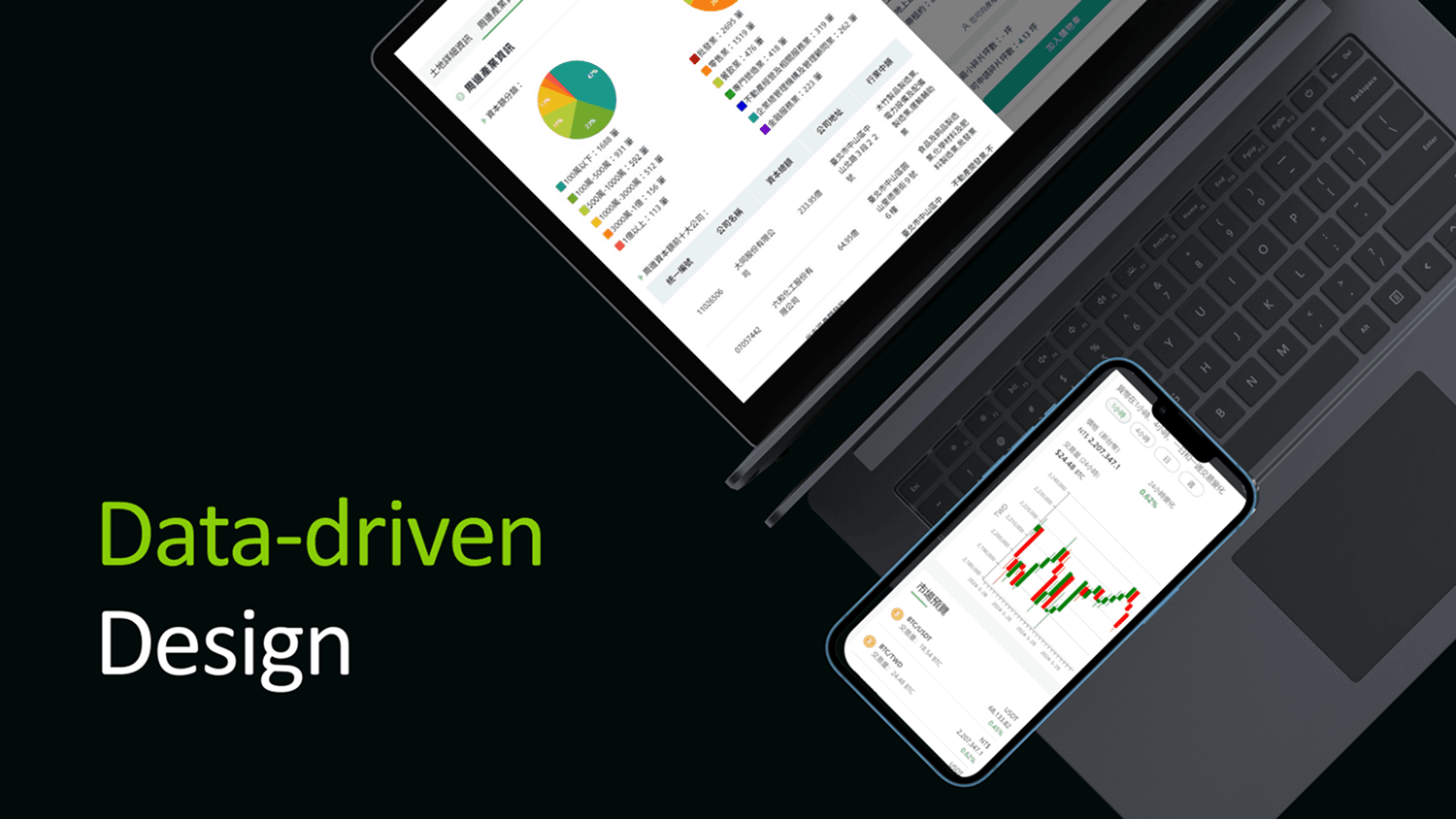
High-consequence decisions need visible evidence before the CTA.
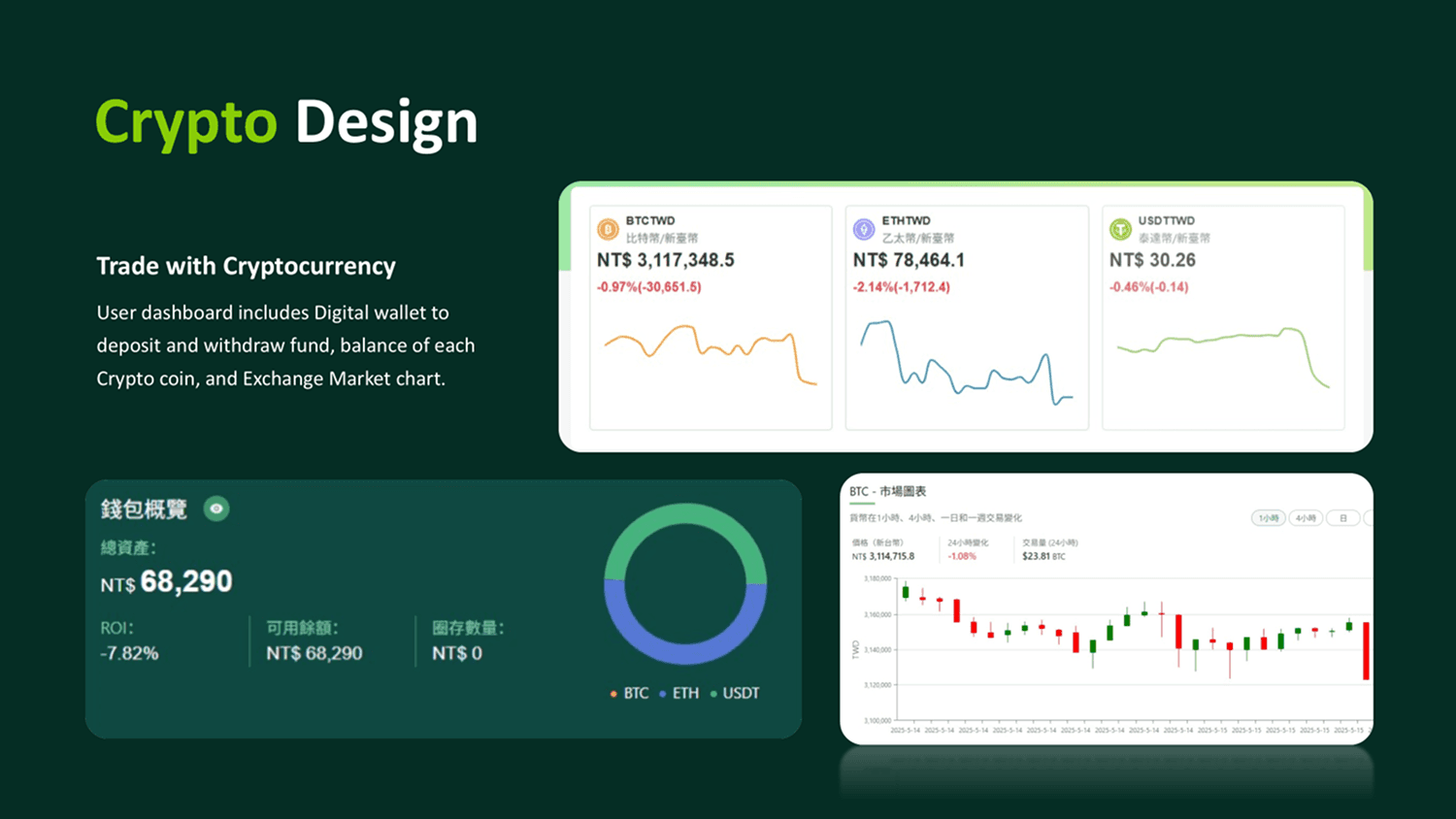
Surface the evidence users need to evaluate risk and make a decision — not simply more data. A land-detail panel surfaces the surrounding-industry data a buyer would actually want before committing, alongside company registry information; a live BTC/USDT candlestick chart and a wallet overview carry the same instinct into the crypto side of the platform.
Land detail & registry
Crypto wallet & market
What the design changed.
Product
Unclear product direction
a user-centered property-investment workflow
Two contrasting personas — one needing guidance, one needing efficiency — grounded a product model that hadn’t been validated before this rebuild.
UX
Unfamiliar blockchain mechanics
familiar transaction interactions
Fractional ownership, trading, and mortgage applications were carried by cards, wallets, and negotiation flows instead of raw blockchain vocabulary.
System
Ad hoc design
a reusable product foundation
Wireframes, a moodboard, and a style guide were established from scratch, giving the product a coherent visual language for the first time.
Trust
Opaque technical processes
visible evidence, state, and history
Registry data, market context, and transaction history stayed visible at the point of decision, instead of asking users to trust the technology on faith.
Learning
Trust is designed through visibility, familiarity, and control — not through technology claims alone.
Additional process documentation and historical presentation material is available on Behance.
View Behance projectNext project
TP Music learning experience